What external links are
An external link is any link that sends the user from your website to another domain. It may point to an official source, technical documentation, research, a tool, a partner, a supplier or a service. In SEO, external links are not decorative elements. When used properly, they help the reader verify information and show that the article is based on real sources.
For example, an article about email authentication may link to guidance from Google, Microsoft or documentation about SPF, DKIM and DMARC. An article about e-commerce platforms may link to official PrestaShop or WooCommerce documentation. The link should have a reason to exist.
When they support trust
External links help when they add value. If an article mentions a technical standard, legislation, a security guideline, a statistic or a company announcement, linking to the original or a reliable source is useful. The reader does not have to trust the text blindly. They can check where the information came from.
Quality matters more than quantity. Two good links to reliable sources are better than ten random links. Links should be relevant to the point being discussed and should not interrupt the reading flow. If a link does not help the user understand the topic better, it probably is not needed.
What to avoid
Avoid linking to doubtful pages, overloaded websites, unrelated sources or content that may change in a risky way. Do not add external links just to make an article look fuller. Do not use affiliate or commercial links without proper marking. And do not send the user away from the website without a good reason, especially near points where you want them to take action.
Anchor text also matters. The linked text should explain where the user is going. Phrases like "click here" are not very helpful. It is better to write "Google DMARC documentation" or "official WooCommerce guide". That way the user knows what they are opening.
Follow, nofollow and sponsored
Not every external link needs the same treatment. A normal editorial link to a trustworthy source can usually remain follow. A link that exists because of advertising, sponsorship or a commercial agreement should be marked properly, usually with sponsored. Links that you do not want to treat as a recommendation can use nofollow.
For most business articles, the basic logic is simple: add a few useful links to good sources and avoid unnecessary ones. SEO does not need excess. It needs clarity.
A practical way to use them
Before publishing an article, check every external link. Is the source trustworthy? Is the link relevant to the sentence? Does it open correctly? Does it have clear anchor text? If it is commercial, is it marked properly? If the answers are clear, external links can support trust without making the article heavier.
The balance with internal links
External links do not replace internal links. An article should also point to relevant pages on the same website, such as services, guides or previous articles. This helps the user continue their journey and helps Google understand which pages are topically connected.
The right approach is a combination. Use an external link when a source or documentation is needed. Use an internal link when there is a useful next step for the reader. If an article about WooCommerce speed discusses hosting, it can link to a related hosting service or an article about Core Web Vitals.
Checking broken links
External pages change. A link that works today may lead to a 404, redirect or unrelated content in six months. That is why periodic checks are useful, especially on articles that receive organic traffic. Broken links do not destroy SEO by themselves, but they hurt the experience and reduce trust.
For a professional website, a simple quarterly check is usually enough. Keep links that help, fix links that changed and remove links that no longer add value.
When an external link helps
An external link helps when it sends the reader to an official source, technical documentation, research or a useful tool that supports the article. It should not exist only for the sake of having links. Source quality and the context around the link are more important than volume.
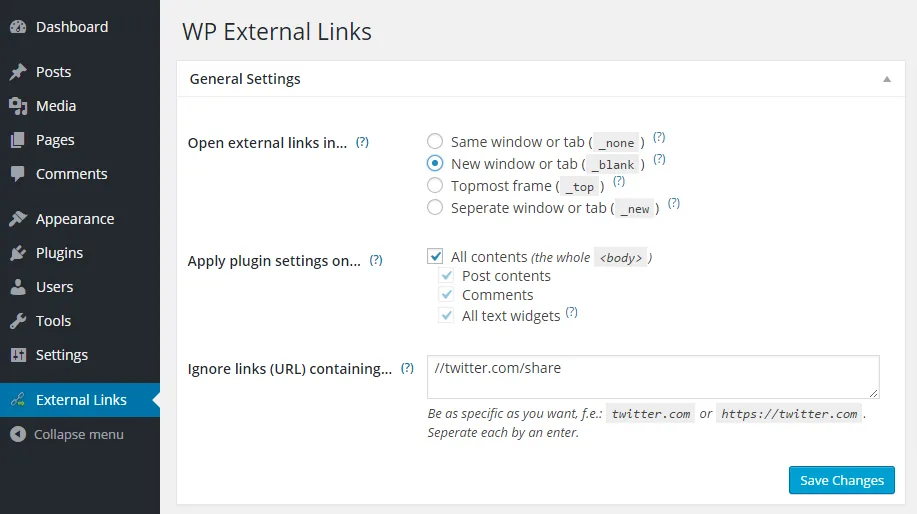
For a professional site, links should open in a new tab only where it makes sense and low-quality or irrelevant pages should be avoided. The goal is to show that the content is based on serious information and that the visitor can continue researching without getting lost.
How to use them naturally
External links should not be added just to fill an article. They are useful when they help the reader verify something, read official documentation or continue research on a trusted source. An SEO article may link to Google Search Central, a security article to official guidance, and a technology article to the tool's own documentation.
The practical rule is simple: use a few relevant links with clear anchor text. Avoid generic phrases like "click here" and prefer text that explains what the user will find. If a link is commercial, affiliate or leads to a source you do not control, it needs extra care. Trust is built when the link feels useful, not promotional.