Marketing Strategy: from visibility to measurable growth
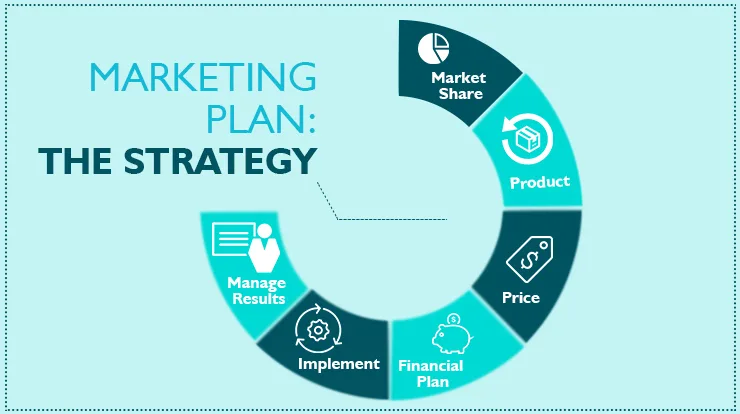
The marketing strategy is not a list of channels nor an arbitrary allocation of budget to Google, social media and email. It is the overall plan by which a business decides which audience to target, with which message, with which offer, at which stage of purchase intent, and how to measure whether all of this is actually generating revenue.
This sounds obvious, but in practice many businesses start out backwards. They invest in the channel first and then think about positioning, audience and conversion path. They advertise without having a clear value proposition, publish content without internal logic and wait for the statistics to explain why the sales did not come. The right strategy does the exact opposite: it first organizes the logic of development and then chooses tools.
Strategy starts before channels
Before any channel is selected, three basic questions must be answered. Who is the ideal customer? What specific problem does the business solve better than the competition? And what is the next step we want the user to take when they come into contact with the brand. Without them, campaigns look active but not effective.
For example, a business that sells low-cost impulse buy products needs another plan, and a service company that closes projects after discussion, evaluation and bidding needs another. In the second case, the strategy must build trust, educate, filter interest and lead to qualified leads. It is not enough to just bring clicks.
Which channels make sense and when
SEO and organic search
SEO has a different role than advertising. It doesn't give immediate view spikes, but it builds a durable asset. It helps the business appear when the prospect is already looking for a solution, so the intent is clearer. When SEO is based on a proper service structure, technical cleaning and content with topical authority, it creates a more stable lead flow and lower acquisition costs over time.
Google Ads and commercial queries
Paid search is ideal when the business wants to absorb commercial demand immediately. However, it is not enough to "run" advertisements. It takes keyword intent matching, the right landing page, the right CTA and measurement discipline. Otherwise the budget is consumed by traffic that does not convert.
Social media and demand capture
Social media works differently. There is often no ready-made buying intent there, so the content must create attention, familiarity and trust. This is why the social strategy cannot be "we upload something every day". It must serve a specific role: awareness, engagement, retargeting or offer support.
Email, CRM and remarketing
In mature funnels, much of the result is not produced on the first visit. It is then produced: in the follow-up, in the nurturing, in the reminder, in the right offer at the right time. This is where email marketing, CRM sequences and automation flows come in, which are usually underestimated even though they have a direct effect on conversion.
How is the budget properly shared?
The correct budget allocation is not done with equal percentages everywhere. It is based on the maturity of the business, the sales cycle and the target of the next quarter. If there is an immediate need for demand, paid search usually takes on a bigger role. If there is already a given demand but the site does not convert well, then the weight must fall on landing pages, conversion logic and technical improvements. If the brand is weak organically, then content and SEO become a priority.
The main mistake is for the company to invest in new traffic while the funnel is still weak. A site that loads slowly, doesn't clearly explain its value and doesn't guide the user properly will continue to lose opportunities even if the budget doubles. This is why the marketing strategy must also include the conversion layer, not just acquisition.
The role of content and the funnel
Content is not simple "update". It is a positioning medium and a quality filter. A good article, a proper service page or a targeted lead magnet can make the visitor understand if the solution really applies to them. This reduces irrelevant leads and increases the quality of enquiries.
When the content is connected with proper internal linking, with landing pages and with clear CTAs, the business does not just attract visits. It builds funnels. Thus the user moves from discovery to evaluation, and from there to communication or purchase. At this point the connection with SEO Content Strategy and Topical Authority it is crucial, because it gives structure to the whole theme of the brand.
Why CRM and automation change the result
A modern marketing strategy does not end at the click. Continues after first contact. If the business doesn't have a way to sort leads, know which channel they came from, measure which campaigns are bringing in better customers, and follow up consistently, then they're missing out on a lot of the value they've already paid to acquire.
Here automation logic becomes a performance multiplier. With proper workflows, the most mature leads are promoted immediately, the less mature ones enter nurturing sequences, and the CRM ceases to be a passive data warehouse. It becomes an operational development tool. For this and a marketing strategy that wants to be truly modern needs connection with AI Workflow Automation and AI Lead Qualification and CRM Automation.
How does a business stand out from the competition?
In markets where many sell similar services or products, your marketing strategy cannot be based on price alone. It must answer why the customer should choose this business and not another that looks similar at first glance. This is achieved with a clear value promise, consistency in message and evidence: case studies, correct service pages, credibility, social proof and content that solves specific queries.
This is also the reason why marketing should work together with content and SEO. When the business appears again and again in critical queries with the right message, then it begins to build trust before the user even sends a message. In today's environment, this is a huge competitive advantage, especially in industries where the purchase decision takes time and evaluation.
What should a proper strategy really count for?
Many times marketing is judged with the wrong indicators. Likes, impressions or clicks can be useful as secondary indicators, but they are not enough to tell if the strategy is working. The right indicators are more rigorous: cost per qualified lead, landing page conversion rate, response time, lead-to-opportunity ratio, revenue contribution per channel and sales cycle length.
When the company begins to see its data in this way, the way of decision-making also changes. It doesn't just invest where there is “traffic”, but where real commercial progress is being made. This turns your marketing strategy from a set of actions into a profit optimization system.
The most common mistakes
- Put all the weight on traffic and almost none on conversion.
- To choose channels because "everyone uses them", without fitting the audience and the product.
- Constantly changing messages and offers without fixed positioning.
- There should be no common measurement for SEO, ads, landing pages and CRM.
- Marketing should not be linked to real customer value and margin.
These mistakes are not always visible from the first week. They accumulate. And in the end the company has done "many actions" without having acquired a clear growth engine.
A practical 90 day plan
In the first stage, an audit is carried out: we look at positioning, audience, existing traffic, conversion path, landing pages and data quality. In the second stage we organize the priority channels and the main landing pages. In the third stage we connect measurement, CRM and follow-up logic so that we know which channel brings not only clicks but also qualified opportunities.
This sequence is much more efficient than adding marketing actions piecemeal. It gives a clear order of priority and transforms marketing from a "display" cost into a commercial improvement mechanism.
How a solid strategy starts
Marketing strategy is essentially the architecture of growth. It defines how attention will be gained, how it will be converted into interest, how it will be filtered into quality and how it will ultimately result in sales or serious business contacts. The more competitive the market becomes, the less piecemeal moves are enough and the more a unified logic between SEO, advertising, content, automation and CRM is needed.
If a business really wants more effective marketing, it should not only ask "where do I advertise", but "how do I design a system that best converts interest into revenue". This is where the difference between mere presence and measurable growth is judged.
Related pages: SEO Content Strategy and Topical Authority, AI Conversion Optimization, Google AI Overviews Optimization.