The cost of building an e-shop with PrestaShop or WooCommerce in Greece in 2026 is not determined by the platform alone. It depends on catalog size, design, filters, payments, shipping, integrations, SEO, content and maintenance after launch. That is why two quotes that both say "e-shop development" can differ by thousands of euros and still both be reasonable if they include different work.
The right comparison is not "is PrestaShop or WooCommerce cheaper?" The right comparison is what the business needs in order to sell without getting blocked every week.
Indicative cost levels
A small e-shop with a ready theme, basic setup, a few products, card/IRIS/cash-on-delivery payments and simple shipping can fit a lower budget. A professional e-shop with careful UX, categories, filters, SEO structure, speed optimization, analytics, email templates and proper policy pages costs more.
When ERP, Skroutz or marketplace feeds, B2B price lists, multiple warehouses, advanced coupons, custom checkout, multilingual content or a large catalog enter the project, it becomes real commercial infrastructure. At that point the cost is not "setup"; it is system development that must work every day.
WooCommerce: when it costs less
WooCommerce is often cost-effective when WordPress already exists, content and SEO matter and the catalog is not extremely complex. It is strong for small and mid-sized stores, but plugins need discipline. If every requirement is added through another plugin, the initial cost can look low while the monthly technical cost rises.
For WooCommerce, budget for hosting, paid plugins, payments, shipping, tax setup, backups, updates, staging and speed. WooCommerce recommends a modern environment with PHP 8.3+, MySQL 8.0+ or MariaDB 10.6+ and 256 MB memory limit or greater, so the store should not run on weak hosting.
PrestaShop: when it is worth it
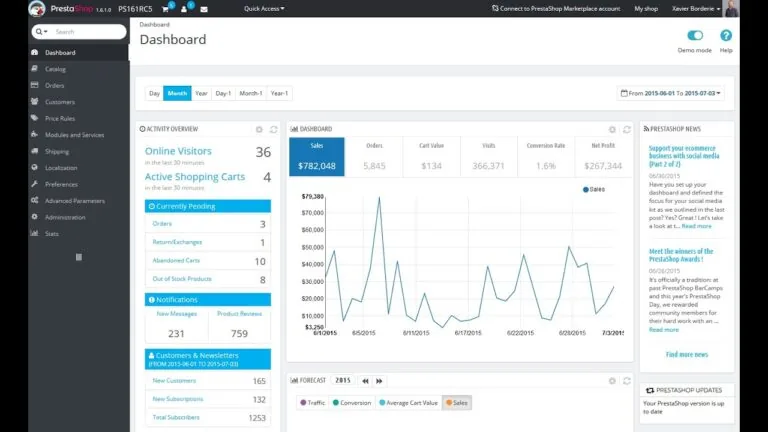
PrestaShop is worth considering when the e-shop is the central business system, with a larger catalog, commercial logic, attributes, pricing needs and a dedicated commerce admin. It is not always more expensive, but it usually requires more careful technical implementation, suitable modules and hosting that supports the commercial workload.
PrestaShop 9 documentation lists MySQL 5.7 minimum or MariaDB 10.2 minimum and recommends at least 512M memory_limit. The practical point is clear: serious e-commerce needs a serious server environment, not brochure-site hosting.
What a proper quote should include
A serious quote should clearly list platform, theme or custom design, number of templates, products to be imported, categories, filters, payments, shipping, ERP or marketplace integrations, SEO URLs, schema, analytics, consent, email deliverability, speed pass, training and support period.
If it does not mention product import, checkout testing, mobile checks, backups and launch plan, the quote is incomplete. The most expensive e-shop is the one that goes live cheaply and then turns every change into an emergency.
How to budget it properly
For a small Greek business, WooCommerce can be the most practical starting point. For a larger catalog or a pure commerce operation, PrestaShop often makes sense. The final cost, however, is determined by features, integrations and launch discipline, not the platform name.
Sources
What really increases e-shop cost
The cost of an e-shop does not depend only on the platform. It depends on the number of products, variations, filters, languages, payment methods, shipping rules, automations and how cleanly SEO needs to be set up. A store with 20 simple products is not the same as a store with colors, sizes, suppliers, stock and ERP.
Content also plays an important role. Photos, descriptions, terms, return policies, order emails and trust pages take time. If they are not ready, they must be budgeted. Otherwise the e-shop may be technically ready but commercially empty.
PrestaShop or WooCommerce from a budget perspective
WooCommerce can be a faster option when the site is already WordPress or when the store is smaller and content plays a large role. PrestaShop often fits better when the catalog is more demanding and commercial management is central to the project. The right choice is not always the cheapest at the beginning, but the one that costs less to maintain.
Before a price is given, a short brief is needed: how many products, which categories, which payment methods, which shipping rules, whether ERP exists, whether invoices are needed, whether content is ready and which market is targeted. With these details, the offer becomes fairer and safer.
What a serious offer should include
A clear e-shop offer should state what is included and what is not. It should mention setup, design, basic pages, initial products, payments, shipping, emails, GDPR/cookies, basic SEO, speed, training and support after delivery. The clearer this is, the fewer misunderstandings appear.
E-shop development is not only "having a cart". It is a commercial system. If built correctly, it helps the business sell and organize itself. If built in a hurry, it creates cost with every small change.