What makes PrestaShop different
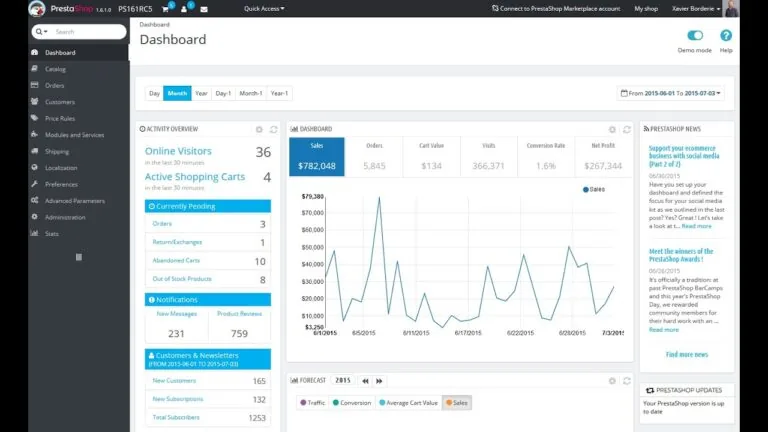
PrestaShop is built as an e-commerce platform from the ground up. It does not start as a simple content site and then add a store on top. That matters when an online shop has more than a few products and needs categories, variations, attributes, filters, discounts, shipping rules, payment methods and clear order management.
On a small brochure site the difference may not be obvious. In a real store, catalog management is daily work. PrestaShop helps because it treats products, stock, prices, taxes and orders as core parts of the system, not as secondary features.
When it is the right choice
PrestaShop is a good fit for businesses that need serious store structure. It makes sense when there are many categories, different suppliers, product variations, custom pricing needs, or integrations with payment and shipping services. It is not always the simplest option for a store with ten products, but it becomes stronger as the catalog grows.
The decision should not be based only on the initial build cost. It should be based on how the shop will work after launch. If the owner needs to edit products, monitor orders, manage stock and keep categories clean, the platform must support that work instead of making it harder.
What it needs to perform well
PrestaShop performs best when it is built cleanly. It needs a careful theme, only the modules that are actually useful, a healthy database, proper caching and hosting that can handle a dynamic catalog. A heavy theme or too many unnecessary add-ons can make even a good platform slow.
The product structure is just as important. Attributes, manufacturers, categories and filters should not be added randomly. A clean structure helps customers find products and helps search engines understand the content of the store.
PrestaShop or something simpler?
If the goal is a very small website with a few products, a simpler solution may be enough. If the e-shop is a real sales channel, PrestaShop provides capabilities that are worth considering. The point is not to choose the most familiar platform, but the one that matches how the business actually works.
A properly built PrestaShop can be fast, clean and scalable. It still needs technical care: controlled modules, updates, backups, speed monitoring and proper SEO structure for categories and products. When these are handled consistently, the store becomes more than a catalog. It becomes a sales tool.
Practical direction
For a business that expects its online store to grow, PrestaShop is worth considering when commercial structure matters. The platform does not solve every problem by itself, but it gives a strong base. The final result depends on implementation: clean code, suitable hosting, sensible modules, careful SEO and day-to-day management that does not slow the team down.
Common PrestaShop mistakes
A common mistake is installing many modules for small features that could be solved more simply. Every add-on can bring CSS, JavaScript, database queries and dependency on a third-party vendor. Before adding one, it is worth asking whether it is really needed and whether it will be maintained.
Another mistake is careless product import. Inconsistent titles, duplicate categories, images with different ratios and supplier-copy descriptions make the store look weak. The commercial quality of the shop starts with the catalog.
A small checklist before launch
- Clean category and filter structure before a large product import.
- Speed check on homepage, category pages, product pages and checkout.
- SEO titles and descriptions for the main categories.
- Testing for payments, shipping, order emails and backups.
When these are handled before launch, fewer problems appear after the first real traffic. PrestaShop can support a serious online store, but it needs commercial and technical order from the beginning.
When PrestaShop is worth choosing
PrestaShop is more valuable when the e-shop has a serious catalog, many categories, variations, pricing rules, shipping rules, suppliers or a need for clear commercial management. It is not necessary for every small store, but when catalog operations are complex, it provides a cleaner workspace.
The choice should be based on how the business will work every day. If the owner often changes products, prices and stock, the platform should help them do that without technical stress. That is where the real value appears.
What to prepare before starting
PrestaShop can support a strong e-shop, but it needs preparation. Before implementation starts, you should have clear categories, core product attributes, payment methods, shipping rules, return policies and decent product images. If these are missing, the technical work slows down and the shop becomes confusing.
You also need to decide how the e-shop will be maintained after delivery. Who will upload products, check orders, update prices, and watch speed, security and SEO? PrestaShop performs better when there is a simple daily operating routine, not when it is installed and then left unattended.