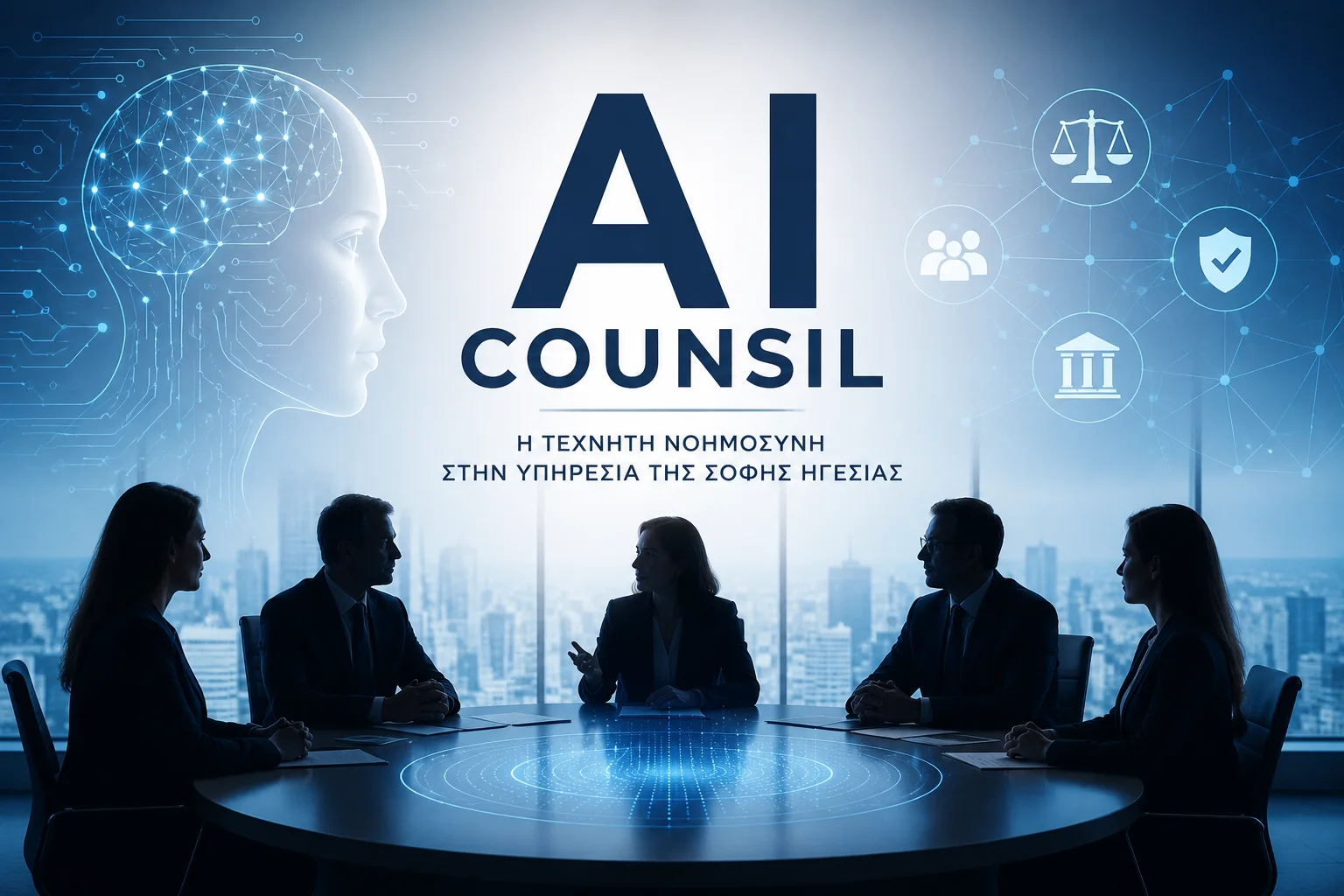
In the Search Console signals of the site we already see something clear: the public is starting to search more for AI agents, n8n, automation and practical applications of artificial intelligence. This is important, because it shows a shift from simple "write me a text" to "help me organize a job, check risks and make a decision". Within this change, the GitHub repo prijak/Ai-council is an interesting example of what a next-generation AI environment might look like.
Ai-council started as a multi-model "council" idea and in the README it is now presented as an AI Studio with Sarvam AI, hosted Ollama, council mode, agent chat, voice AI, WhatsApp integration and video generation. It's not just a UI to talk to a model. The basic logic is that many roles, models or personas can answer, judge each other and in the end a chairman gives composition. This structure is exactly the point that makes the theme possible for SEO as well as practically useful for business.
What is Ai-council in practice?
According to the repository, Ai-council is a self-hosted web application in JavaScript, with a frontend in React 19/Vite and Firebase for authentication/cloud sync. There is also Express backend, Docker setup, PWA components and screenshots inside the repo. The GitHub API shows it as a public repository with main language JavaScript, creation on February 20, 2026 and repository update on May 12, 2026, evidence that this is a recent project and not an old experiment that was forgotten.
The idea of the "council" is simple but powerful: instead of asking one LLM for an answer, we set up a small panel of roles. An analyst looks at logic, a contrarian looks for weak points, a technician looks at implementation, a legal or risk persona controls risks, and a chairman finally draws a conclusion. This doesn't automatically make the answer correct, but it does reduce the chance that a one-sided idea will slip through the cracks.
How the council model works
The README describes three phases: first opinions, peer review and final verdict. In the first phase each member answers the initial question. In the second, the answers go through criticism or revision. In the third, the chairman synthesizes the result into a clearer decision. For someone who has worked with teams, this sounds more like meeting protocol than prompt engineering.
That is exactly where the value lies. The market is full of tools that promise "AI agent" without explaining when the agent should decide, when it should ask a human, and when it should stop. A council pattern puts structure. It doesn't let the answer just be the most persuasive text. He makes her go through counterargument, comparison and synthesis.
What features can be seen in the repository
The project has evolved into a multi-page AI Studio. The README mentions Home, Council, Agent Chat, Voice AI, WhatsApp and Video Gen, with different auth patterns per feature. There are 40+ personas, categories for leadership, philosophy, India, AI Agents, coaching, legal/finance and templates for research, model debate, agentic task force, skill pipeline, Socratic review and tech ethics. This is important because it shows that the project is not limited to a chat box. It tries to organize roles, workflows and ways of use.
Of particular interest is the MCPPanel. The Model Context Protocol has become a buzzword around agents because it provides a common way for an AI tool to connect to data sources and tools. In Ai-council MCP appears as an advanced option in Council and Agent modes. This shows where logic can go: a board that not only discusses, but can see tools, data or workflows before responding.
Because it matters to a business
AI becomes useful when it enters real decisions. A small e-shop can use such logic to evaluate new products, price changes, campaigns or technical risks. A marketing team can ask different personas to review a message: SEO strategist, copywriter, legal reviewer, customer voice and performance marketer. A developer can put in an architectural check, security review and implementation plan before writing code.
The main thing is not to replace people. It is to stop the blind use of "one prompt, one response". The more important the decision, the more it needs polyphony, counterargument and final practical conclusion. In this context, Ai-council acts as a living example of how such a flow can be designed.
What anyone who tries it should be aware of
The repo is interesting, but needs some technical attention before it goes into production use. There are backend services, Firebase, authentication, API keys, managed providers, WhatsApp and video generation. These mean real credentials and not just frontend testing. Whoever sets it up has to work with a separate demo environment, limited keys, rate limits, HTTPS, secrets outside the repository and clear control of who has access.
Also, the README says MIT, but checking the public raw URL did not find a separate LICENSE file. This does not invalidate the intention stated by the creator, but for commercial exploitation or fork it is good to always confirm the usage license from the repository itself and ideally to have a normal license file. This is a small but important detail when talking about productive use.
Which keywords are worth chasing?
This specific topic opens a powerful cluster around: AI Council, AI agents, multi-agent AI, agentic workflows, Model Context Protocol, MCP, self-hosted AI, AI automation, n8n agents, human-in-the-loop automation and LLM orchestration. In Greek, it is worth working on phrases like "automations with AI agents", "what is an AI agent", "AI for business", "n8n automations", "MCP and artificial intelligence" and "AI tools for decisions".
The strategy here is not to write an isolated article. It is to build thematic unity. Our existing article on automations with n8n and AI Agents already receiving a signal. The Ai-council article can stand as a technical/strategic piece for multi-agent logic, while the next article on n8n and MCP can cover the production side of workflows.
The conclusion
Ai-council should not be read as just another open-source AI project. It should be read as an indication of market direction. AI tools are moving from simple chat to organized groups of roles, tools, memory, approval steps and task execution. Whoever understands this transition early will be able to design better automations, better support flows and better decision-making.
For iChipHost, this theme naturally clicks with WordPress, PrestaShop, support modules, PriceHawk, n8n and custom automations. It is not a theory. It is the framework on which services and tools can be built that solve real problems.
AI AGENTS CLUSTER
Related articles to follow
If you want to see the topic more practically, these articles continue the same section with examples, tools and risks for productive use.
Production
AI agents, n8n and MCP
How do we go from a model board to real workflows with tools and approvals.
Read the articleAgent internet
Moltbook and agent identity
What the agent-only social network shows for identity, reputation and prompt injection.
Read the articleNew models
Gemini 3.5 Flash
What changes in the new generation of models for coding, agents and multimodal work.
Read the article